
Contact Us
Contact Us

Programmable Thermostats: Control Your Heating From Anywhere

Set heating schedules that match your routine. Most models learn your patterns and automatically adjust temperatures during cold Irish winters. Install in under an hour — no plumber needed.

12 min read Beginner April 2026
Modern thermostat display on white wall showing temperature settings and heating schedule interface
Aoife O'Sullivan

Aoife O'Sullivan

Smart Home Technology Specialist

Aoife O'Sullivan is a Smart Home Technology Specialist with 12 years of experience helping Irish homeowners implement practical automation solutions.

Why Your Heating Deserves a Brain

Let's be honest — manually adjusting your boiler dial every morning is tedious. You're either freezing at 6 AM or wasting money heating an empty house at 3 PM. A programmable thermostat fixes that without you thinking about it once.

These aren't fancy gadgets. They're straightforward devices that learn your schedule and adjust heating automatically. Turn it on in October when Irish winters start biting, set your preferred temperatures for different times of day, and it handles the rest. Most people see 10-15% savings on heating bills just by setting sensible schedules.

Quick fact: If you heat your home to 21°C while you're at work, you're spending roughly 8% more per degree than needed. A thermostat running on schedule keeps it at 16°C when you're gone.

Close-up of programmable thermostat on living room wall with hand adjusting settings
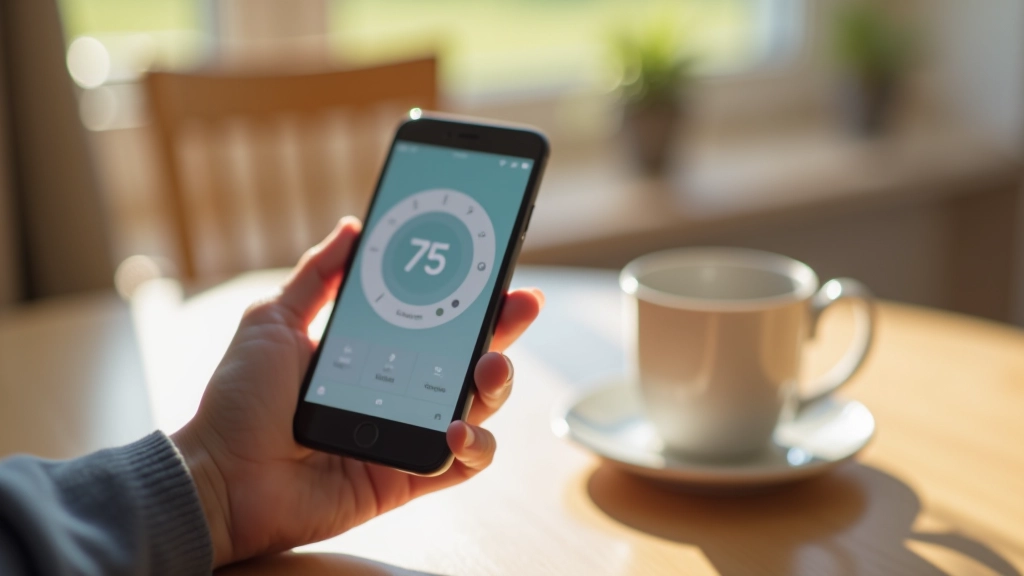
Smartphone displaying smart thermostat app with temperature control and scheduling interface

Control from Your Phone — Actually Works

The biggest selling point? You can adjust your heating from anywhere. Left for work and realize you turned the heat up too high? Lower it from your phone. On your way home and want the house warm by the time you arrive? Bump it up 15 minutes before you get there.

Modern thermostats work through simple apps. Open the app, see your current temperature, and adjust. That's it. No complicated menus. No hidden settings. The interface is basically identical on most models — slider for temperature, schedule view for planning, and that's genuinely all you need to use daily.

Some models even show you when the heating's running and how much energy you're using. That real-time feedback is surprisingly useful. You'll start noticing patterns — "Oh, the boiler runs for 15 minutes to reach 21°C" — and you can optimize from there.

Learning Thermostats That Adapt to You

Some thermostats are genuinely clever. You don't need to set anything. Just turn it on, live normally for a week, and it learns your routine. You wake up at 7 AM? It'll warm the house starting at 6:45 AM. You're always out Tuesday and Thursday afternoons? It'll reduce heating those days automatically.

Learning thermostats use algorithms to predict your comfort needs. It's not magic — they're just tracking when you adjust the temperature and building a pattern. After two weeks, most models are uncannily accurate. You'll realize it's set the temperature perfectly for bedtime without you touching anything.

1

Install and power on

Takes 30-45 minutes. Usually just wires from your boiler into the thermostat.

2

Live your normal life

Adjust temperature when you feel like it. The thermostat is watching and learning.

3

Watch it take over

After 7-10 days, it's got your pattern down. It'll start adjusting automatically.

Installation view showing thermostat wiring being connected to boiler system
Energy monitoring dashboard showing heating usage patterns and cost breakdown

Real Savings — Numbers You'll Actually See

Most Irish homeowners see savings between €80 and €180 per year. Not life-changing money, but it adds up. That's roughly €7 to €15 monthly that you weren't saving before.

The savings come from heating less when you're not home or sleeping. If you're at work 8 hours daily and heating at night costs nothing compared to daytime heating, you're looking at significant reductions. Plus, you won't overshoot temperatures — no more heating to 22°C because you forgot to adjust it down.

Installation costs between €150 and €350 depending on your boiler type. Most models pay for themselves within 2-3 years, then it's pure savings. And that's before considering the comfort factor of always having your house at the right temperature without thinking about it.

Installation Is Simpler Than You'd Think

You don't need a plumber. Seriously. Most thermostats connect to your boiler's existing wiring. You're literally removing the old dial thermostat, matching four wires, and screwing the new one in place. Total time? 30-45 minutes for an average person.

The trickiest part is finding your boiler's thermostat wires, but most thermostats come with clear diagrams. If your boiler's already got a thermostat installed, the new one goes in the exact same spot. You might need a plumber if your setup is unusual — combi boilers or system boilers sometimes have different wiring — but standard setups are genuinely DIY-friendly.

After installation, you'll spend about 10 minutes setting up the app and creating your heating schedule. Most people set something like: 18°C while away, 20°C in the evening, 17°C at night. That's literally all you need to configure for basic operation.

"The installation took me less time than I expected. Once I found the wires in the wall, it was just matching colors and pushing them in. The app setup was straightforward — basically just told it when I wake up and when I leave home."

— Seán, Dublin homeowner

Hands installing thermostat unit into wall bracket with visible wiring

Start Small, See Results Quickly

Programmable thermostats aren't revolutionary technology. They're just sensible automation that's been around for years. What makes them worth installing now is that they're genuinely affordable, the apps actually work well, and the installation is straightforward enough that most people can handle it themselves.

You don't need to overhaul your entire home setup. Start with a thermostat, get comfortable with it for a month, then decide if you want to add smart plugs or voice control later. It's the lowest-barrier smart home upgrade you can make, and you'll notice the difference immediately — both in comfort and your heating bills.

This winter, stop manually adjusting your boiler. Let it learn your routine and handle itself.

Information Disclaimer

This article is for informational purposes only. Installation instructions and energy savings estimates are based on typical scenarios and may vary depending on your specific boiler type, home insulation, and heating usage patterns. Before installation, consult your boiler manufacturer's documentation or contact a qualified heating engineer if you're uncertain about your system's compatibility. Energy savings figures are approximate and based on industry standards — your actual savings will depend on factors including outdoor temperature, your heating schedule, and home size. Always follow safety guidelines when working with boiler systems, and consider professional installation if you're uncomfortable working with electrical wiring.